Summary
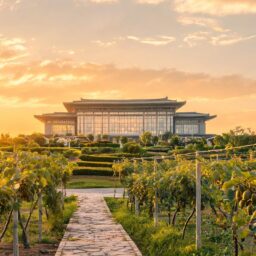
Ningxia State Farm Group has put its 40 percent stake in Domaine Chandon (Ningxia) Vineyard Co up for sale with a reserve price of just RMB1, with bidding open until 22 October. Moët Hennessy International, a unit of LVMH, holds the remaining 60 percent. Financial statements show that as at 31 August 2026 the vineyard had total assets of RMB24.271 million and liabilities of RMB24.270 million, leaving owner's equity at negative RMB17.2733 million — a balance-sheet insolvency that explains the RMB1 exit price.
In other drinks-sector developments: Japan's Fair Trade Commission on 7 October launched compulsory investigations into Asahi, Kirin, Sapporo and Suntory over suspected private discussions on price increases for beer and happoshu after industry association meetings; the four companies together hold more than 90 percent of Japan's beer market. The Sichuan Wine and Fruit Wine Industry Association has formally approved the drafting of a group standard for fruit wine tasting glasses, with compilation expected to be completed by the end of 2026. New Zealand Winegrowers' 2026 annual report shows wine exports of NZ$2.108 billion in the 12 months to June 2026, up 0.48 percent year on year, on volumes of 306.2 million litres, up 6.04 percent.
Exports to mainland China reached 7.344 million litres, up 71.91 percent, worth NZ$69.841 million, up 24.27 percent, making mainland China the sixth-largest market by volume and fifth-largest by value. Sauvignon Blanc accounted for 276.2 million litres, about 90 percent of total exports. On 8 October 2026, Auswan Creek brand ambassador Dr Geoff Raby's 2026 China tour opened in Shenzhen alongside the launch of Guangdong Auswan Creek and a Guangdong market partner conference, under the theme 'Australian quality links the Greater Bay Area, Guangdong market opens a new chapter'.
Auswan Creek entered China in 2012, and the new Guangdong entity is intended to strengthen channel development and consumer engagement.
Commentary
Ningxia State Farm's RMB1 sale of its 40 percent stake in LVMH's Chandon winery lays bare the deeper difficulties facing China's wine industry as it pursues premiumisation. Chandon was a key part of LVMH's sparkling wine push in China and once carried the international ambitions of the Helan Mountain East Foothills region in Ningxia. But by August 2026 owner's equity stood at negative RMB17.27 million, leaving the business insolvent and underscoring the localisation challenges foreign brands face in China.
For NZ SMEs, the episode is not isolated. China's wine market is contracting overall, yet New Zealand's export volumes to China rose 72 percent and value rose 24 percent, with Sauvignon Blanc making up about 90 percent of volumes — a sign that Chinese consumers still want imported wine with a strong price-quality ratio and a distinctive varietal character. NZ wineries should look at channel expansion into lower-tier Chinese cities while watching inventory pressure in premium dining.
Japan's antitrust probe into the four largest brewers over suspected coordinated price rises is a reminder that any highly concentrated market carries regulatory risk, and NZ exporters can use that to highlight their differentiation and compliance credentials. The approval of a group standard for fruit wine tasting glasses shows standardisation in China's fruit wine category is accelerating, and NZ cider or fruit wine producers could engage with the standard early to build category recognition. Auswan Creek's new Guangdong company, aimed at strengthening Greater Bay Area channels, shows Australian brands are competing for share through regional depth.
NZ wine companies need to speed up brand-building and consumer engagement in China rather than relying solely on traditional importers.
Keywords: Chandon winery, Ningxia State Farm, LVMH, RMB1 sale, Japan beer antitrust, NZ wine exports to China, fruit wine tasting glass standard, Auswan Creek, insolvency
Source: Sina
Disclaimer: This article is compiled from publicly available sources for general information only. The analysis and commentary are editorial opinions. MiDeer Observer does not guarantee the accuracy or completeness of the information provided. Readers should seek independent professional advice before relying on this content, or contact us for more information.