
Summary
Nanhua Futures said in a 6 November note that log futures rose before falling back, spot basis narrowed slightly and trading enthusiasm declined. In the previous session, the LG2701 log futures contract settled at CNY 17.942/m³, with the 01-03 contract spread at CNY -17.941/m³. In the spot market, Rizhao quoted 17.940m small-A radiata pine logs at CNY 750/m³, 5.9m small-A radiata pine at CNY 780/m³, 3.9m medium-A radiata pine at CNY 820/m³ and 5.9m medium-A radiata pine at CNY 840/m³, all down CNY 10/m³.
New Zealand 3m lumber was priced at CNY 1,130-1,140/m³. November CFR offers for New Zealand radiata pine logs were in a range of USD 133-137/JAS m³, with the low end up USD 1/JAS m³ from the previous month and the high end unchanged. On the supply side, 10 vessels carrying 420,000 m³ departed New Zealand's 12 ports between 30 October and 5 November, with the vessel count flat month on month and volume up 30,000 m³; 9 vessels carrying 350,000 m³ went direct to China, up 2 vessels and 100,000 m³ month on month.
On the demand side, average daily outbound shipments of softwood logs from 13 ports across 7 Chinese provinces stood at 63,800 m³ as of 1 November, down 5.90% from the previous week, while Shandong ports averaged 37,400 m³ per day, down 5.56%. As of 30 October, radiata pine log inventories were 1.45 million m³ (-15) and total softwood log inventories 2.11 million m³ (-14), with accelerated destocking providing some support. China's total softwood log imports in September 2026 were about 2.216 million m³, up 11% year on year; January-September imports were about 17.94 million m³, down 0.4% year on year.
Bulk freight rates for New Zealand-to-China softwood logs in late November were USD 43/JAS m³, down 7% from USD 46/JAS m³ in early November. Nanhua said weakening demand for processing lumber downstream, cautious sentiment and a lack of willingness to restock actively, combined with concentrated arrivals at Rizhao in Shandong and growing supply pressure, are expected to keep the market rangebound with a weaker bias.
Commentary
New Zealand radiata pine logs are an important commodity in New Zealand-China trade, and price swings directly affect the returns of local forestry exporters. Chinese port inventories are destocking at a faster pace, but demand for processing lumber downstream has weakened, market sentiment is cautious, and concentrated arrivals at Rizhao in Shandong are further weighing on spot prices. For NZ SMEs, the near-term risk is Chinese buyers pushing for lower prices and delaying orders; shippers should adjust delivery schedules flexibly and avoid concentrating cargoes at ports during supply peaks.
At the same time, a 7% month-on-month fall in ocean freight eases some cost pressure, but the slight rise in the low end of CFR offers shows sellers still want to hold prices, squeezing margins. On the industry front, China's total softwood log imports fell 0.4% year on year in January-September, but September alone jumped 11% year on year, suggesting demand remains resilient, especially as radiata pine remains hard to replace in construction lumber and packaging. New Zealand is China's largest log supplier, with more than 40% of China's softwood log import share, but it faces competition from European spruce and Canadian hemlock, and domestic Chinese timber substitution is gradually emerging.
NZ SMEs should watch for marginal changes in Chinese property policy and infrastructure project start-up rates, while developing alternative markets such as Japan and South Korea to reduce reliance on a single market.
Keywords: log futures, New Zealand radiata pine, softwood log imports, spot basis, port inventories, ocean freight, Nanhua Futures, Rizhao market, downstream demand, rangebound with weaker bias
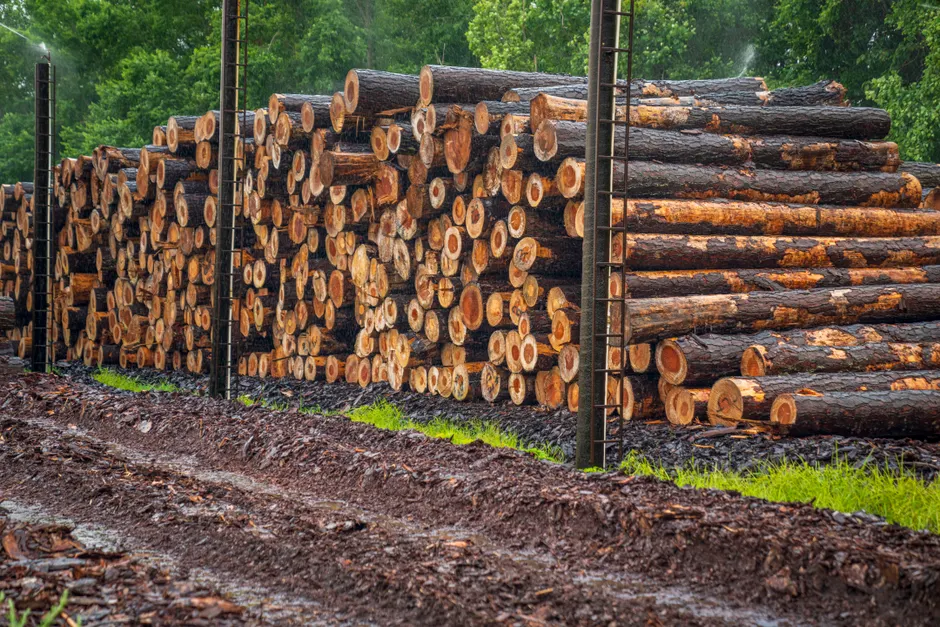
Photo by Mark Stebnicki on Pexels
Source: Hithink RoyalFlush
Disclaimer: This article is compiled from publicly available sources for general information only. The analysis and commentary are editorial opinions. MiDeer Observer does not guarantee the accuracy or completeness of the information provided. Readers should seek independent professional advice before relying on this content, or contact us for more information.