Summary
China is a strategically important market for New Zealand beef and lamb, and the industry is chasing value rather than volume, Meat Industry Association (MIA) chief executive Nick Beeby told China. com Finance during the ninth China International Import Expo (CIIE). New Zealand red meat reaches more than 100 markets globally.
By total beef and lamb exports, China is New Zealand's second-largest market after the United States; China is the largest market for New Zealand lamb exports, while the US is the largest for beef. New Zealand consumes only a small share of its production, exporting the vast majority, and its red meat exports have a history of more than 150 years. Beeby said many New Zealand meat companies have been doing business with Chinese partners for 30 to 40 years and hope to deepen long-term, trust-based partnerships.
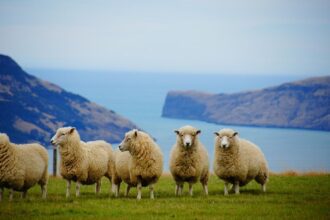
He said New Zealand beef and lamb are raised outdoors on pasture year-round and are never given growth hormones, with naturally low reliance on medical intervention. The CIIE participation aims to promote the 'Taste Pure Nature' national country-of-origin mark, supported by MIA, the New Zealand Beef and Lamb industry group and the Ministry for Primary Industries. On channels, partners have already used the mark in packaging, retail and foodservice, with visibility notably strong in channels represented by Sam's Club, and the goal is full coverage across foodservice, retail and online.
MIA members include Silver Fern Farms, Alliance Group and ANZCO. Beeby, attending CIIE for the first time, said the variety of imported products in China exceeded expectations, and noted that 20 years ago New Zealand's largest lamb export market was the UK, which has now fallen to third or fourth, while China has grown into such an important market.
Commentary
MIA's push for the 'Taste Pure Nature' country-of-origin mark at CIIE reflects a shift in China's red meat market from scale expansion to value competition. China is New Zealand's largest lamb export market and its second-largest beef market after the US; this structural difference means New Zealand's China strategy needs to be more precise: lamb can leverage differentiation such as grass-fed and hormone-free claims to defend high-end share, while beef must contend with competition from the US. For NZ SMEs, the fragmentation of Chinese retail channels is both a challenge and an opportunity—New Zealand brands are already visible in high-end supermarkets such as Sam's Club, but penetration in foodservice and e-commerce still needs strengthening.
Notably, MIA emphasises 'not pursuing volume', which aligns with Chinese consumers' upgrading demand for food safety and traceability, but brand awareness is still at an early stage, and SMEs could consider joint marketing or using the origin mark to reduce market education costs. In terms of industry structure, large processors such as Silver Fern Farms and ANZCO dominate exports to China, while smaller farms and processors need to enter through differentiated products (such as organic or specific cuts) or regional distribution partnerships. China's lamb imports are diversified, and competitors such as Australia and Uruguay also promote grass-fed concepts, so New Zealand needs to build barriers in cold-chain timeliness and brand storytelling.
In the future, as China's foodservice chain penetration rises, standardised cuts and customised supply may become new growth points, and NZ SMEs should focus on B2B opportunities in the foodservice supply chain rather than only retail shelves.
Keywords: New Zealand beef and lamb, China International Import Expo, Meat Industry Association, Taste Pure Nature, lamb exports, grass-fed, Silver Fern Farms, national country-of-origin mark, China market, long-term partnership
Photo by Change C.C on Pexels
Source: China.com Finance
Disclaimer: This article is compiled from publicly available sources for general information only. The analysis and commentary are editorial opinions. MiDeer Observer does not guarantee the accuracy or completeness of the information provided. Readers should seek independent professional advice before relying on this content, or contact us for more information.