Summary
New Zealand's log exports to China rose 2.1 percent year on year to 13.848 million cubic metres in the first three quarters of 2026, with export value up 5.9 percent to USD 1.69 billion. The average export price for logs to China rose year on year for five consecutive months from May, lifting the overall average price for the nine-month period by 3.8 percent. Meanwhile, New Zealand's wood processing sector continues to contract, with plant closures and layoffs in Northland and Waikato.
Japan's Juken New Zealand has begun consultation with staff at its Triboard Mill in Kaitāia, Northland, after failing to find a buyer willing to take on existing employees since listing the plant for sale in March, and plans to cease operations by March 2027 at the latest. Northland's unemployment rate stood at 8.3 percent at the time, the highest in the country. The union noted that the Northland Mill and Triboard Mill in Kaitāia are the seventh and eighth wood processing plants to close nationwide in the past two years, and that combined with the closure of the Kinleith pulp line, the Eves Valley sawmill, and the Karioi pulp mill and Tangiwai sawmill in the Ruapehu region, New Zealand has seen a clear net loss of primary wood processing jobs over two years.
On shipping, New Zealand log vessel loadings are expected to total around 50 ships in October, recovering from 42 ships and 1.62 million cubic metres in September, while domestic port arrivals are forecast at 44 ships and 1.58 million cubic metres for the month, down on the previous month. On policy, the New Zealand National Party released its forestry and wood processing policy in early November, pledging to introduce a 'wood policy' if re-elected that would require government building designs to consider timber alongside steel and concrete from the design stage, and setting a target to double value-added wood exports by 2034 while continuing to support the Wood Processing Growth Fund. The New Zealand Wood Processors and Manufacturers Association said it supports the policy, but its own target is to lift industry exports to more than NZD 11 billion by 2034, which would require sawmill processing capacity to expand about fourfold.
Commentary
The continued contraction of New Zealand's wood processing industry alongside growth in log exports to China reflects a deeper tension in a resource-based economy's shift towards adding value. As one of the world's largest log exporters, New Zealand exports about 70 percent of its annual harvest in log form, with China its largest market, taking more than 70 percent of total exports. Export volumes to China rose 2.1 percent and value 5.9 percent in the first three quarters, with the average price rising for five consecutive months.
On the surface this looks positive, but it comes at the cost of a shrinking processing sector. The closure of the Kaitāia plant in Northland and eight processing plant closures in two years expose longstanding weaknesses in local processing competitiveness and high energy and labour costs. For NZ SMEs, the short-term gains from log exports cannot mask the risk of staying at the low end of the value chain: should Chinese demand fluctuate or alternative sources increase, exporters will face direct price shocks.
The National Party's proposed 'wood policy' seeks to require timber to be considered in building through government procurement and sets a target to double value-added wood exports by 2034, offering potential demand for local processors, but implementation must overcome hurdles in building standards, cost competitiveness and capacity expansion. The Wood Processors and Manufacturers Association has set a more aggressive target, calling for processing capacity to expand about fourfold, which would require large-scale investment and technological upgrading; SMEs could look to opportunities in processing equipment and logistics services. At the same time, structural changes in the Chinese market warrant caution: domestic timber inventories in China are high, the property downturn is weighing on demand, and competition from Russian and European timber is intensifying.
New Zealand log exporters should accelerate the shift to higher-value products such as engineered wood products or custom sawn timber to reduce reliance on a single log market. Northland's 8.3 percent unemployment rate is a warning that industrial upgrading cannot rely on log exports alone, or regional economies will become more fragile.
Keywords: New Zealand log exports, exports to China, wood processing industry, plant closures and layoffs, Juken New Zealand, National Party wood policy, value-added wood exports, Northland unemployment rate, log shipments, Wood Processing Growth Fund
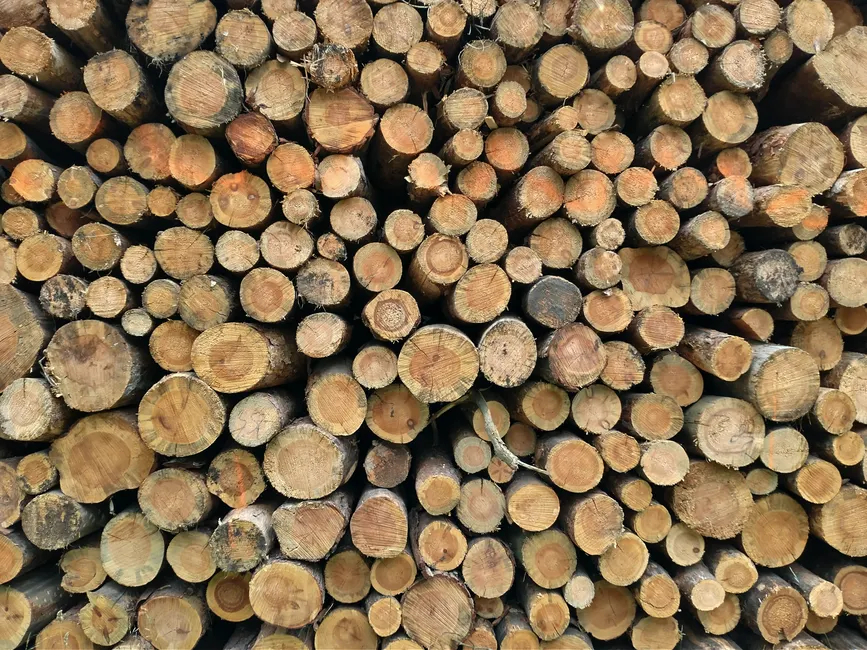
Photo by Jan 'Sob' Soběslav on Pexels
Source: 100njz.com
Disclaimer: This article is compiled from publicly available sources for general information only. The analysis and commentary are editorial opinions. MiDeer Observer does not guarantee the accuracy or completeness of the information provided. Readers should seek independent professional advice before relying on this content, or contact us for more information.