Summary
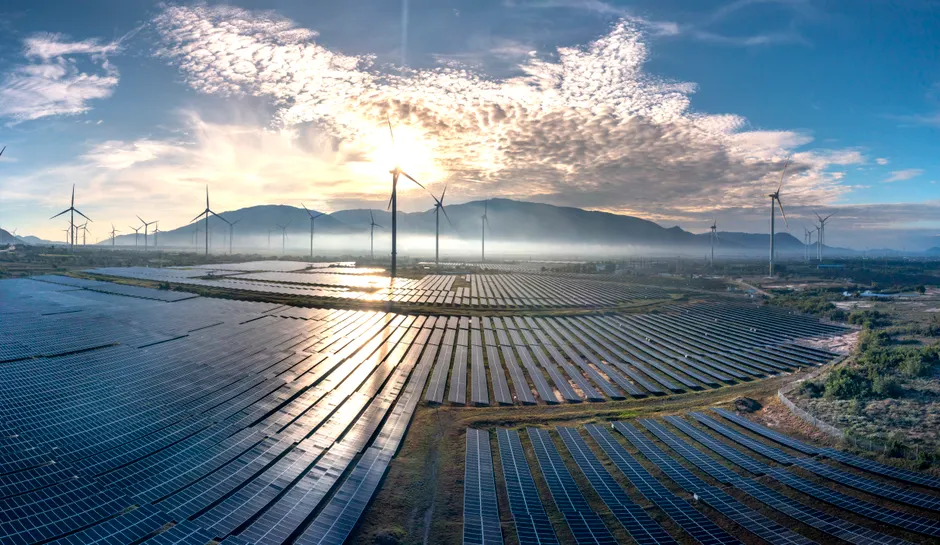
China is the 'adult in the room' and many people still fail to grasp how much it contributes to the global energy transition, New Zealand writer Eugene Doyle said in an interview with China News Service. Through innovation, adaptability and vast industrial resources, China is developing the technologies, full supply chains and products the world needs to move away from fossil fuels, he said. Over the past decade China has accounted for nearly half of global installed wind and solar capacity and about 60 percent of new installations, and its carbon dioxide emissions fell in 2025.
Citing the Pew Research Center's annual Global Attitudes Survey released in July 2026, he said people in 27 of the 36 countries and territories surveyed held a more favourable view of China than of the United States. On trade barriers, Doyle said tariffs imposed by Europe and the US on Chinese green technology are 'entirely counterproductive'. The Biden administration decided to impose a 100 percent tariff on Chinese electric vehicles and the Trump administration followed with a series of measures.
Global fossil fuel emissions rose about 1 percent in 2025 to about 38 billion tonnes, and 'we don't have time to play games with tariffs and trade wars', he said. As a New Zealander, he stressed that 'the US is not our friend, and China is not our enemy'. He cited the China-Pacific Island Countries Climate Change Cooperation Centre, which has been operating since 2022, saying it has done solid work connecting scientists, sending technical experts and supporting green energy projects, and that China has built dozens of small climate projects in several Pacific island countries.
He also expressed disappointment at the New Zealand government's 2025 decision to lower its 2050 target for reducing biogenic methane emissions, a move criticised by WWF New Zealand as 'a betrayal of future generations'. Doyle is a Wellington-based writer who has long written on Middle East issues and peace and security in the Asia-Pacific.
Commentary
Eugene Doyle's views offer New Zealand small and medium business owners a lens for reassessing China's role. China's dominance in global renewable energy supply chains is beyond dispute: International Energy Agency data show China produces about 80 percent of the world's solar panels, 70 percent of its lithium batteries and 60 percent of its wind turbines. For New Zealand firms this means a cost advantage in sourcing green technology and equipment, but it also warrants caution about over-concentration in supply chains.
Doyle's criticism that European and US tariffs on Chinese green technology are 'counterproductive' is a reminder that trade barriers can push up transition costs for New Zealand SMEs. If New Zealand were to follow allies in restricting Chinese solar products, for example, local installers and farmers would face higher prices for solar systems. On the other hand, China's climate projects in Pacific island countries, such as solar street lights and small wind farms, demonstrate a pragmatic path for technology transfer, and New Zealand companies could explore subcontracting or support services for these projects, particularly in engineering consulting and operations and maintenance training.
Doyle's disappointment at the New Zealand government's decision to lower its methane reduction target also deserves attention: agriculture is a pillar of the New Zealand economy, but biogenic methane accounts for nearly half of national emissions, and a policy retreat could erode the 'green premium' for New Zealand agricultural products in international markets, especially as future barriers such as the EU's carbon border adjustment mechanism take effect. New Zealand SMEs should focus on two things: first, using the cost advantages of Chinese green technology to accelerate their own decarbonisation and maintain export competitiveness; second, guarding against supply chain volatility caused by geopolitical tension and considering diversified sourcing. Doyle stresses that 'China is not the enemy', but business decisions should still be based on risk hedging rather than a single narrative.
Keywords: Eugene Doyle, climate change, energy transition, China wind and solar capacity, trade barriers, Pacific region, carbon emissions, New Zealand climate policy
Photo by Quang Nguyen Vinh on Pexels
Source: chinanews.nz
Disclaimer: This article is compiled from publicly available sources for general information only. The analysis and commentary are editorial opinions. MiDeer Observer does not guarantee the accuracy or completeness of the information provided. Readers should seek independent professional advice before relying on this content, or contact us for more information.