Summary
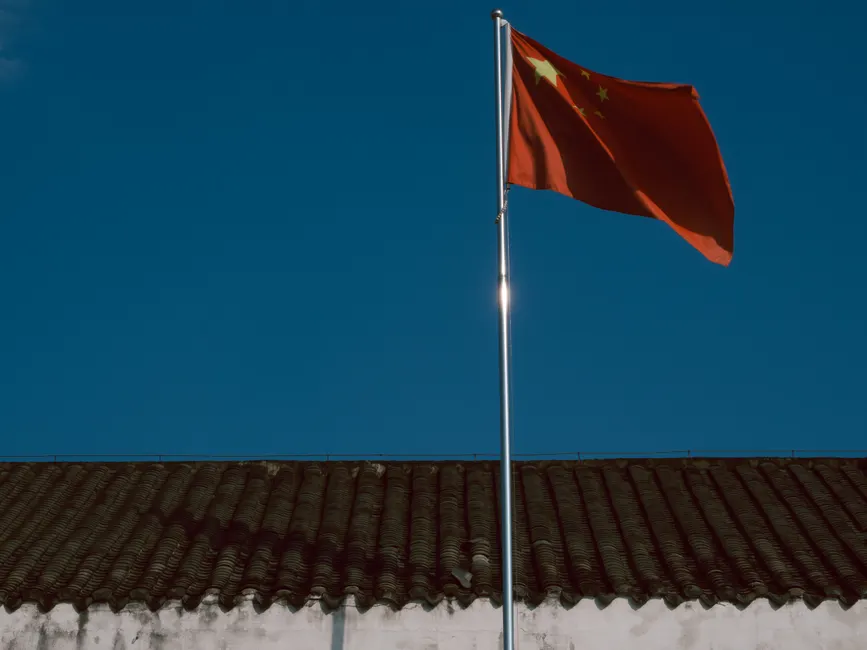
The Chinese Ambassador to New Zealand, Wang Xiaolong, joined a National Day flag-raising ceremony hosted by the Auckland Chinese Community Centre in Auckland on 20 September 2026. Prime Minister Christopher Luxon attended alongside MPs from the country's main political parties, Auckland local government representatives and Chinese community leaders, in an event that carried a warm and celebratory mood. Wang reviewed the achievements of the 77 years since the founding of the People's Republic of China under the leadership of the Communist Party of China.
He said China-New Zealand relations had maintained healthy and stable momentum in recent years and that the two countries had broad scope for future cooperation. He hoped the Chinese community would keep drawing on its strengths — telling China's story and the story of China-New Zealand friendship — to deepen people-to-people ties and contribute more to the bilateral relationship. Luxon spoke highly of the extraordinary achievements made since 1949, praising China's progress in poverty alleviation, infrastructure and new energy vehicles.
He thanked New Zealand's Chinese community for its contribution to the country's economic, social and cultural development, and said he was ready to keep advancing the relationship and turn cooperation potential into more tangible results.
Commentary
The ambassador's presence alongside the Prime Minister at the same flag-raising ceremony is a clear signal that the bilateral relationship remains on a stable footing. For SME owners, that means the policy environment around trade with China is unlikely to shift sharply in the near term. New Zealand's exports to China have long been led by dairy, meat and timber, but recent years have seen a marked rise in participation by smaller firms in food and beverage, health supplements and tourism services.
Mr Luxon's specific reference to China's progress in new energy vehicles stands out. Chinese EV brands are moving into New Zealand quickly — BYD and MG already hold a share of the market — and local SMEs can look for openings in charging infrastructure installation, after-sales servicing and parts supply. The Chinese community, New Zealand's fifth-largest ethnic group, is another asset, with mature business networks and cross-border connections.
SMEs that use those networks to read Chinese market access rules and shifting consumer preferences will get further than those relying on trade fairs alone. Political goodwill, however, does not automatically convert into orders. Competition in China is intense and the number of New Zealand brands on cross-border e-commerce platforms is climbing fast, leaving firms to invest in product certification, brand positioning and localised marketing.
The community itself is not monolithic, with generational and regional differences that call for targeted engagement rather than broad-brush assumptions. Tariff concessions under the upgraded free trade agreement now cover most categories, but non-tariff barriers — Chinese-language labelling and quarantine requirements among them — remain a hidden cost for smaller exporters. Whether this high-level exchange translates into commercial gains will depend on whether firms have the execution capability to work the community networks and digital channels.
Keywords: Ambassador Wang Xiaolong, Auckland Chinese Community Centre, National Day flag-raising ceremony, China-New Zealand relations, Christopher Luxon, Auckland, Chinese community, 77th anniversary of the founding of the People's Republic of China, people-to-people ties
Disclaimer: This article is compiled from publicly available sources for general information only. The analysis and commentary are editorial opinions. MiDeer Observer does not guarantee the accuracy or completeness of the information provided. Readers should seek independent professional advice before relying on this content, or contact us for more information.