Summary
New Zealand entrepreneur Andre first connected with Shenzhen at 13 in 2007, sourcing Shenzhen-made electronics for the New Zealand market through cross-border purchasing. In late 2025 he relocated to Shenzhen full-time to run international trade and product sourcing, bridging overseas firms and Chinese suppliers with procurement matching, quality control and end-to-end trade solutions. He also founded the New Zealand–Greater Bay Area Network (NZGBA) to build business and cultural links between New Zealand and the GBA, create a community for Kiwis living in the region, and help organise the New Zealand section of the 'Hello APEC · Shekou Culture Market', which showcased New Zealand products and culture and drew thousands of visitors.
Andre said New Zealand was the first developed country to sign a free trade agreement with China, creating major opportunities across sectors. He sums up Shenzhen as 'speed, openness, opportunity', citing its complete industrial clusters and the GBA's convenient location. With APEC 2026 to be held in Shenzhen, he hopes the event will show more New Zealanders a real, multi-dimensional Shenzhen and drive two-way people-to-people and business dialogue, unlocking the GBA–New Zealand cooperation potential.
Commentary
Andre's story of putting down roots in Shenzhen reflects a shift in China–New Zealand economic ties from bulk commodities toward services and innovation ecosystems. As the first developed country to sign an FTA with China, New Zealand has long exported mainly primary products such as dairy and timber, but small and medium-sized services trade and cross-border e-commerce have grown notably in recent years. Andre's NZGBA platform effectively fills a service gap for NZ SMEs entering the GBA market — local firms generally lack the capability to engage deeply with Chinese supply chains, especially in quality control and rapid prototyping.
For NZ SMEs, Shenzhen's 'speed' can compress product iteration cycles from months to weeks, though intellectual property protection and supplier screening costs warrant attention. On the other hand, the APEC summit year in Shenzhen will bring a short-term wave of business delegations; New Zealand firms can use grassroots networks like NZGBA to position early and avoid being marginalised at large trade shows. Notably, competition within the GBA is intense, and NZ brands relying solely on a 'pure' label will struggle to stand out; localisation for local consumption scenarios is needed.
Andre's path from cross-border purchasing at 13 to settling in Shenzhen and founding a business also suggests younger NZ entrepreneurs can test the waters with small, high-frequency trade to gradually build understanding of the Chinese market.
Keywords: New Zealand entrepreneur, Shenzhen, international trade, Greater Bay Area, APEC, China–New Zealand FTA, people-to-people exchange, cross-border e-commerce
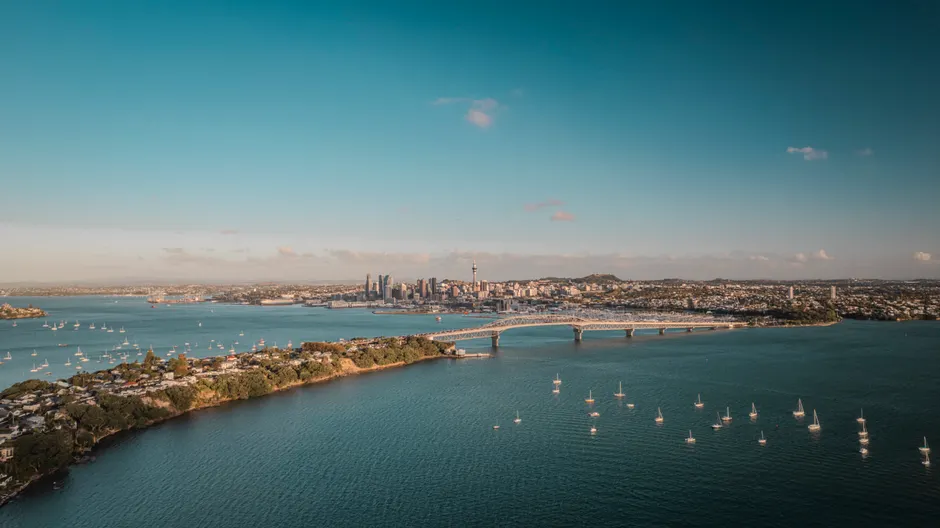
Photo by Ollie Craig on Pexels
Source: Shenzhen News Network
Disclaimer: This article is compiled from publicly available sources for general information only. The analysis and commentary are editorial opinions. MiDeer Observer does not guarantee the accuracy or completeness of the information provided. Readers should seek independent professional advice before relying on this content, or contact us for more information.