Summary
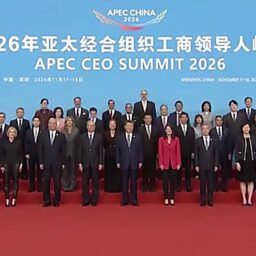
The fourth and final meeting of the APEC Business Advisory Council (ABAC) for 2025 concluded in Shenzhen on 16 November, with participants from APEC economies telling CGTN Radio they recognised China's achievements during its APEC host year and were optimistic about Asia-Pacific co-operation. Canadian delegate Jan De Silva said this year's APEC Economic Leaders' Meeting could draw the largest attendance on record, attributing this to China's hosting and calling the host role a major success. She noted she had attended the Digital Economy Ministers' Meeting in Chengdu in the northern summer and had now witnessed the speed of technology adoption and rollout in Shenzhen.
She added that Canadian Prime Minister Carney will attend the APEC Economic Leaders' Meeting and looked forward to continued positive bilateral exchanges between Canada and China. New Zealand delegate Stephanie Honey said the meeting discussed the Free Trade Area of the Asia-Pacific, removal of tariff barriers, sustainable development, digital trade and paperless trade processes, and saw the launch of the book 'Structures of Harmony'. She said that over the past two weeks she had visited Shenzhen, Beijing and Shanghai and observed China's transition towards a low-carbon economy, with green new-energy licence plates visible everywhere, and that China offers co-operation opportunities for smaller economies such as New Zealand.
Papua New Guinea delegate Isikeli Taureka said the meeting covered artificial intelligence technology, compliance, regulation, public use and education, as well as investment in digital infrastructure, and noted that APEC and ASEAN economies account for nearly 60 percent of global trade. Malaysian delegate Ruben Emir Nanalinngam said ABAC meets four times a year, that Malaysia and China had carried out much good co-operation this year, and expressed hope that the meeting's recommendations would be implemented progressively over the coming years.
Commentary
The ABAC meeting in Shenzhen signals deeper Asia-Pacific trade and economic co-operation, and several agenda items are highly relevant to New Zealand's export-oriented economy, particularly for small and medium-sized enterprises. These include the Free Trade Area of the Asia-Pacific, tariff reduction, digital trade and paperless processes. New Zealand delegate Stephanie Honey highlighted the opportunities created by China's low-carbon transition, such as using Chinese new-energy technology to decarbonise the domestic economy, which offers potential market entry points for New Zealand SMEs in clean technology, green building and electric vehicle support services.
China's rapid technology adoption and rollout, as seen in Shenzhen's digital practices, also provides a window for New Zealand firms to collaborate and learn. However, SMEs should assess the market rationally: despite its scale, China's barriers to entry and competitive intensity are significant, especially in digital trade, where domestic platforms and ecosystems are already mature. New Zealand firms need to identify niche areas such as premium food, professional services or sustainable solutions.
The meeting's focus on paperless trade and digital infrastructure investment could lower cross-border transaction costs for New Zealand small exporters, but data compliance and localisation requirements warrant attention. New Zealand's exports to China remain dominated by primary products, while the potential of services trade and technology co-operation is yet to be fully realised. If rule harmonisation under the APEC framework is implemented, it would improve the business environment for SMEs.
The Papua New Guinea delegate noted that APEC and ASEAN economies account for nearly 60 percent of global trade, meaning regional integration will materially affect New Zealand's trade flows. New Zealand businesses should closely track APEC's subsequent policy direction, particularly timetables for tariff and non-tariff barrier reduction and the specific terms of digital trade rules, so they can adjust supply chains and market strategies in advance.
Keywords: APEC Business Advisory Council, Shenzhen, Asia-Pacific co-operation, China host year, digital economy, free trade area, artificial intelligence, low-carbon transition, New Zealand, Malaysia
Photo by gdmoonkiller on Pixabay
Disclaimer: This article is compiled from publicly available sources for general information only. The analysis and commentary are editorial opinions. MiDeer Observer does not guarantee the accuracy or completeness of the information provided. Readers should seek independent professional advice before relying on this content, or contact us for more information.