Summary
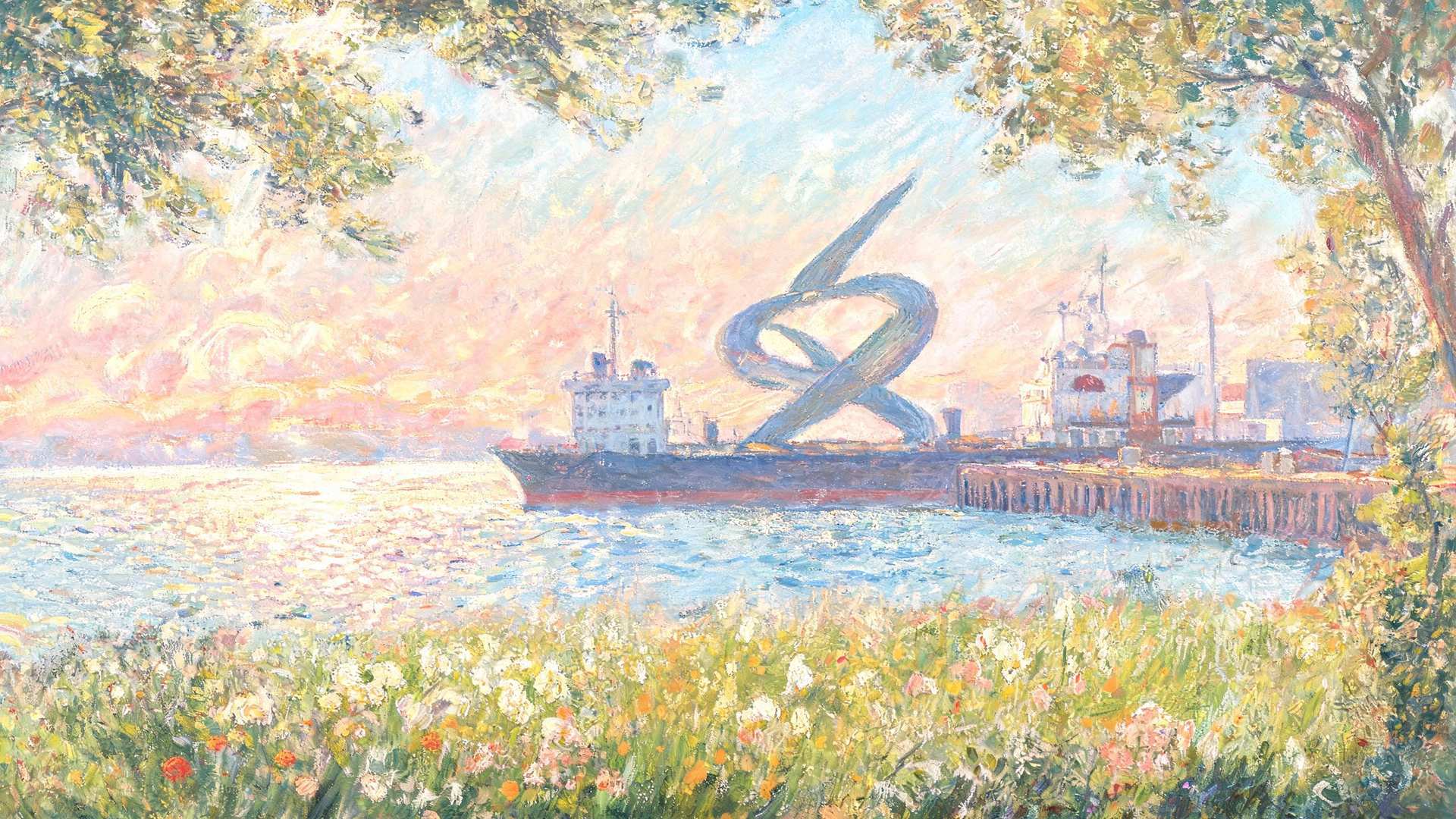
New Zealand Embassy Minister-Counsellor Alexandria Smith and a delegation visited Rizhao for the departure ceremony of a New Zealand-China collaborative sculpture project. The conch sculpture, designed by New Zealand artist of Cook Islands descent Michael Tuffery, was developed and produced by the 3D printing studio of Shandong Shuanggang Piston Co. , Ltd.
The piece stands about 3.2 metres tall and was printed using 0.03mm ultra-high-precision photosensitive resin combined with an iterative precision composite casting process. Following the ceremony, the sculpture will be shipped to Arras, France, for exhibition. Shuanggang Piston launched Rizhao's first industrial-grade 3D printing project in 2018 and has since achieved scaled application and industrial development.
The first work in the same series is already installed in Wellington. Smith said the project was completed jointly by a New Zealand artist and Chinese craftsmanship, linking the South Pacific, China and France. She said New Zealand, as a trading nation, sees products going from China to international markets and is also considering more possibilities for New Zealand products entering China.
Commentary
The shipment from Rizhao to France of a high-precision sculpture created by a New Zealand artist in collaboration with a Chinese 3D printing firm highlights both the application of advanced Chinese manufacturing in the arts and the potential for New Zealand-China cooperation in combining creative industries with high-end manufacturing. Shandong Shuanggang Piston's move from industrial components to artistic sculpture, using 0.03mm-precision 3D printing and composite casting, offers a new path for the rapid production of complex artworks. For New Zealand SMEs, this points to the possibility of using Chinese manufacturing capacity to commercialise creative products: the model of New Zealand design, Chinese manufacturing and global markets has precedents in dairy and post-production for film and television, and is now being validated in cultural products such as sculpture.
At the same time, the New Zealand embassy official explicitly mentioned considering more opportunities for New Zealand products to enter China, suggesting that in cultural creativity and high-end customisation, New Zealand firms can leverage Chinese supply chains to reduce production costs and expand into international markets. However, such cooperation is highly dependent on technical alignment and intellectual property protection, and SMEs should assess whether their design value can remain distinctive in cross-border production. Looking at industry trends, the global 3D printing market is forecast to exceed US$40 billion by 2027, with applications in art and architecture growing significantly.
If New Zealand companies can combine local cultural IP with Chinese manufacturing capability, they may find differentiated advantages in niche markets.
Keywords: New Zealand-China cooperation, sculpture shipment, Rizhao, 3D printing, Michael Tuffery, Alexandria Smith, Shuanggang Piston, Arras France, Wellington, cultural exchange
AI illustration on MiDeer Observer
Source: Rizhao Net
Disclaimer: This article is compiled from publicly available sources for general information only. The analysis and commentary are editorial opinions. MiDeer Observer does not guarantee the accuracy or completeness of the information provided. Readers should seek independent professional advice before relying on this content, or contact us for more information.