Summary
RaboResearch expects the global dairy market to move towards a more balanced production landscape after more than a year of export oversupply. Milk production in the seven major exporting regions will contract 0.2 percent year-on-year in the fourth quarter of 2026 and remain broadly stable in the first half of 2027. The research arm said EU milk production will decline year-on-year in the fourth quarter of 2026 and the first quarter of 2027 because prices paid to producers are well below year-earlier levels, before stabilising over the remainder of 2027.
In the United States, despite milk prices being slightly below average (affected by lower cheese and butter quotations), production is expected to grow about 2 percent in 2027, driven by an expansion in the herd (up 162,000 head year-on-year). In Oceania, the upward trend in New Zealand supply will continue, with Fonterra's farmgate milk price forecast for the 2026/27 season at NZ$9.50 per kilogram of milk solids reinforcing producer confidence and production on track to reach a record 2 billion kilograms of milk solids by mid-2027. Australian producers are starting the 2026/27 season in a relatively favourable position, but El Niño-related dry conditions pose a challenge.
New Zealand also faces pressure from high inflation in the cost of imported agricultural inputs, while Australia is under cost pressure from higher diesel prices and interest rates. On the demand side, global dairy demand has been more resilient than expected, with growth increasingly concentrated in high-protein products. Asian shipments provide a solid foundation for international markets, Chinese consumption is showing signs of recovery, and demand for functional dairy ingredients and the expansion of B2B foodservice are offsetting weak retail sales.
RaboResearch expects price trends to vary by product: Oceania whole milk powder prices may rise in the first half of 2027 but face downside risk in the second half, while prices for fats such as butter are expected to weaken on ample supply.
Commentary
RaboResearch's latest forecast paints a cautiously optimistic picture for New Zealand's dairy industry. Fonterra has set its farmgate milk price for the 2026/27 season at NZ$9.50 per kilogram of milk solids, a level below last season's record NZ$10 but still historically high and sufficient to support farm profitability. As the world's largest dairy exporter, New Zealand is expected to reach a record 2 billion kilograms of milk solids by mid-2027, driven mainly by good pasture conditions and producer confidence.
However, elevated costs for imported agricultural inputs are eroding margins, with fertiliser and feed prices continuing to rise due to global supply chain pressures, and small and medium-sized farms need more disciplined cost management. On the demand side, signs of recovery in Asian markets, particularly China, warrant attention. Growth in functional dairy ingredients and B2B foodservice is offsetting weakness in retail channels, offering opportunities for New Zealand's higher-value exports.
But whole milk powder prices may face downside risk in the second half, and companies should avoid over-reliance on commodities, instead expanding into high-protein and functional product lines. Drought risk in Australia could limit its production growth, potentially opening some space for New Zealand in Asian markets, though the competitive landscape has not fundamentally changed. New Zealand small and medium-sized enterprises should closely monitor changes in China's dairy import policies while leveraging the tariff advantages of the upgraded China-New Zealand free trade agreement to build brand recognition in niche markets.
Keywords: global milk production, RaboResearch, Fonterra farmgate milk price, whole milk powder prices, EU milk production decline, US dairy herd, Chinese dairy demand, butter prices, Oceania dairy, 2027 dairy outlook
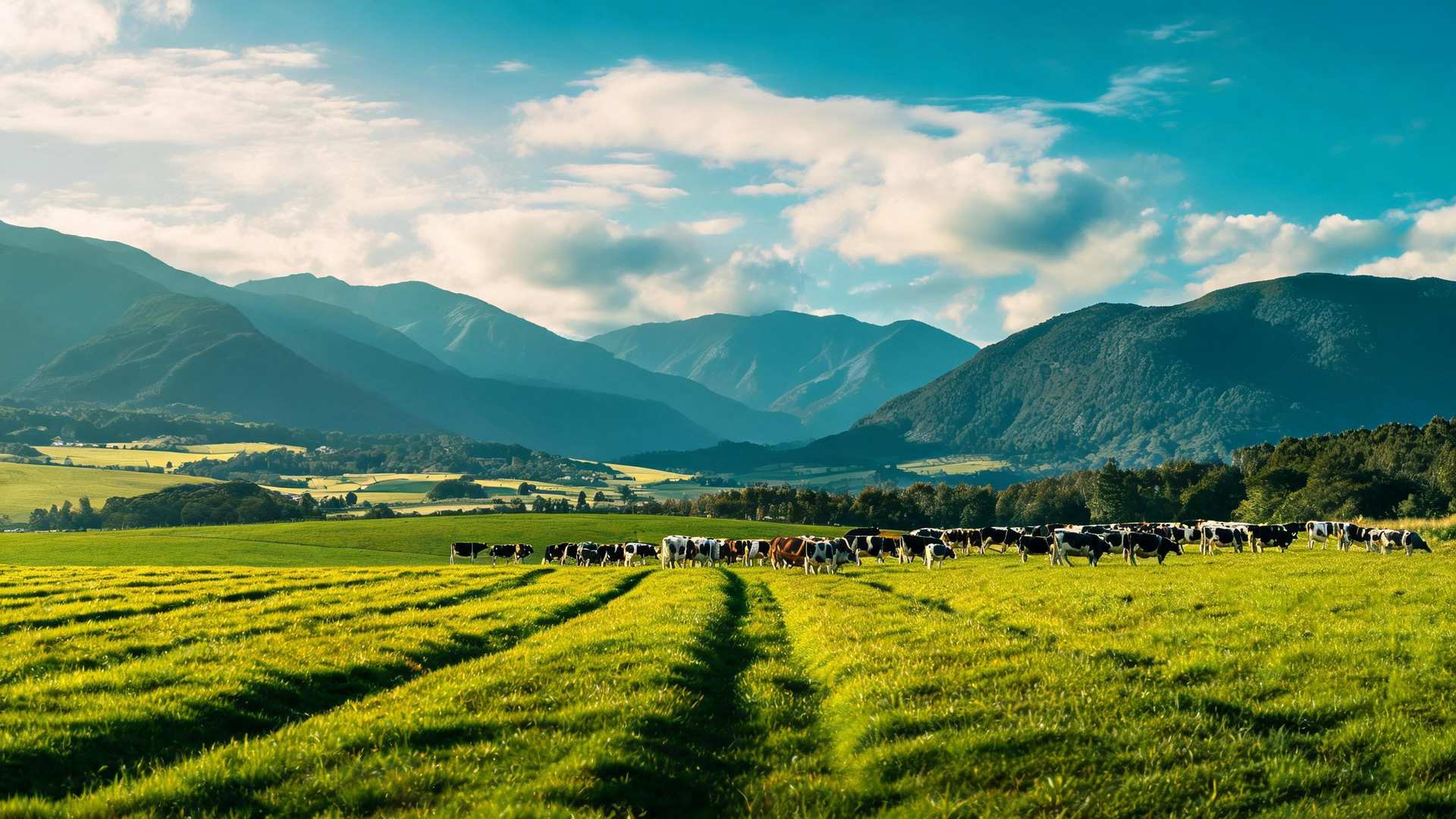
AI illustration on MiDeer Observer · Based on news imagery
Source: Diario Lechero
Disclaimer: This article is compiled from publicly available sources for general information only. The analysis and commentary are editorial opinions. MiDeer Observer does not guarantee the accuracy or completeness of the information provided. Readers should seek independent professional advice before relying on this content, or contact us for more information.