Summary
Asiafruit issue 250, published on 19 November 2026, features a special focus on kiwifruit, reported by Liam O'Callaghan. The issue includes an exclusive interview with Himanshu Arora, Zespri's head for the Asia-Pacific South region, on the impact of the New Zealand-India free trade agreement on the kiwifruit industry. Arora said the FTA could make India New Zealand's fifth-largest global market within the next decade.
The article notes that kiwifruit is attracting unprecedented global consumer interest, driven by post-pandemic health and nutrition trends and by new varieties with richer colours and better taste. Global suppliers and marketers are responding with larger volumes and new products, with India seen as one of the biggest untapped opportunities. New Zealand writer Richard Rennie also reports from Nagaland in north-east India on the first centre of excellence for kiwifruit aimed at supporting local growers.
The issue covers the latest developments from Northern Hemisphere suppliers in Greece, Italy and France, as well as Chile's kiwifruit expansion plans, and previews Fresh Focus Cherry 2027.
Commentary
Zespri, the world's largest kiwifruit marketer, controls about 90 percent of New Zealand's kiwifruit exports and has a brand value of more than NZ$3 billion. India offers significant potential: per-capita kiwifruit consumption there is currently very low, but demand is growing rapidly as the middle class expands and health awareness rises. If a New Zealand-India free trade agreement is successfully signed, it would substantially reduce kiwifruit tariffs (India currently imposes a tariff of about 30 percent on New Zealand kiwifruit), making Zespri more price-competitive and potentially allowing it to replicate its success in the Chinese market.
For New Zealand small and medium-sized business owners, especially those in horticulture and food exports, the opening of the Indian market means new supply chain opportunities, such as packaging, cold chain logistics and marketing services. However, the Indian market also presents challenges: local infrastructure is underdeveloped, distribution channels are complex, and India's domestic kiwifruit industry (such as the planting project in Nagaland) is developing and could create competition in the future. In addition, the global kiwifruit supply landscape is changing, with Greece, Italy and France in the Northern Hemisphere and Chile in the Southern Hemisphere all expanding plantings, so Zespri needs to continue innovating in varieties and brand marketing to maintain its premium.
New Zealand SMEs should monitor the specific timetable and product scope of Indian tariff reductions, establish channel partnerships in advance, and assess opportunities for collaboration within the Zespri ecosystem.
Keywords: kiwifruit, Zespri, New Zealand-India free trade agreement, Asiafruit, India market, Nagaland, centre of excellence, Chile, Northern Hemisphere suppliers
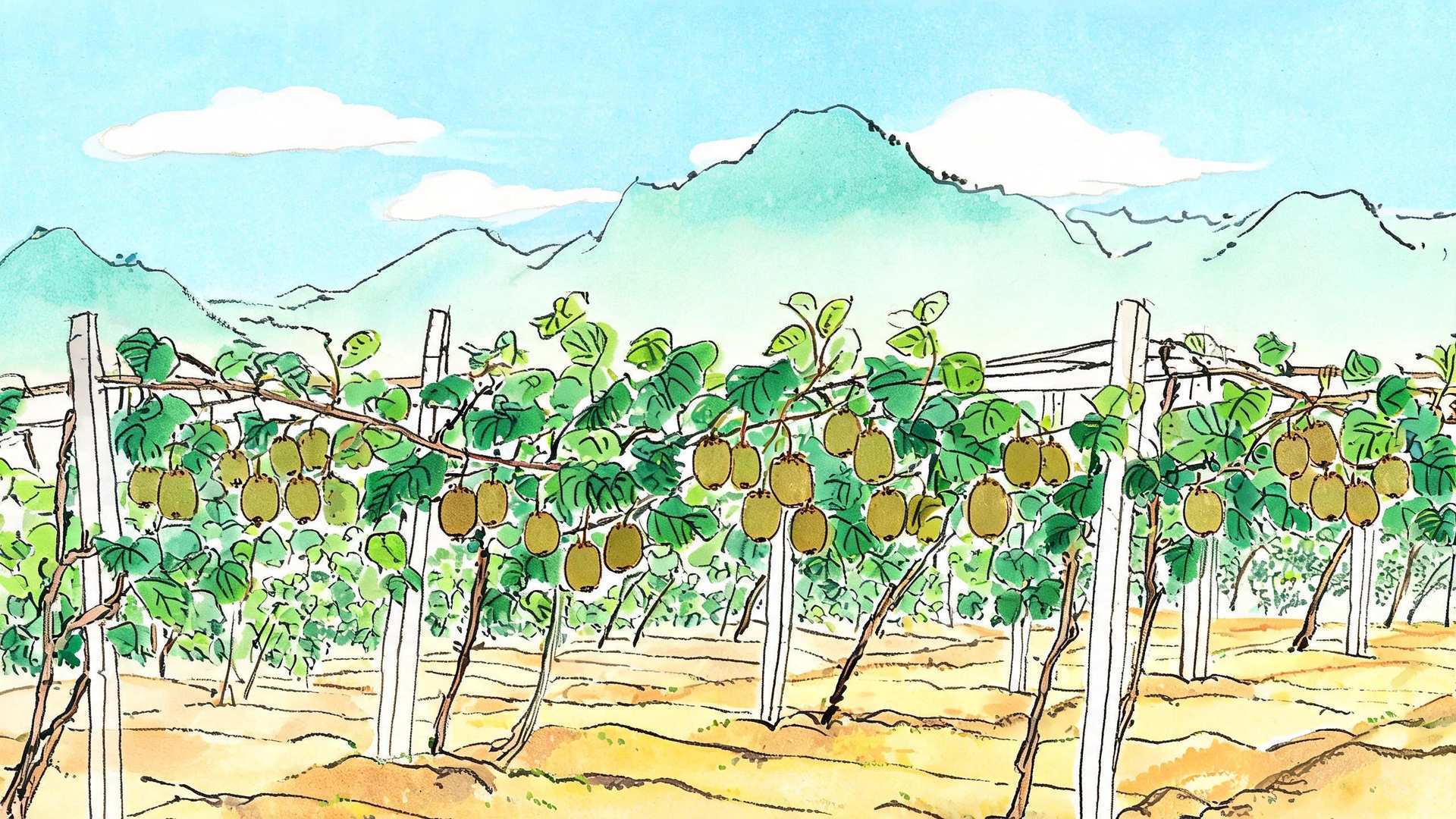
AI illustration on MiDeer Observer
Source: Fruitnet
Disclaimer: This article is compiled from publicly available sources for general information only. The analysis and commentary are editorial opinions. MiDeer Observer does not guarantee the accuracy or completeness of the information provided. Readers should seek independent professional advice before relying on this content, or contact us for more information.