
Summary
Forestry and logging services prices rose 0.82% in the September 2026 quarter from the June quarter and were 9% higher than a year earlier, Stats NZ said. The producer price index tracks fees charged by loggers and others for harvesting and other forestry work. Input prices paid by the forestry and logging industry fell 0.81% quarter-on-quarter and were up 0.80% year-on-year, while output prices (mainly logs) rose 1.1% quarter-on-quarter and 1.6% year-on-year.
Stats NZ also reported that timber prices received by producers rose 0.6% quarter-on-quarter and 2.8% year-on-year, based on the producer price index tracking prices received by producers for goods sold. Prices for boards, battens, veneer and plywood rose 2.6% quarter-on-quarter and 1.6% year-on-year. Timber and sawn timber producer prices reached their highest level since the June 2022 quarter.
Input prices paid by wood product manufacturers rose 1.2% quarter-on-quarter and 4.1% year-on-year. Economy-wide producer output prices rose 0.8% for the quarter and 3.7% year-on-year.
Commentary
Forestry and logging services prices rose 1.2% in the September 2026 quarter and were 9% higher year-on-year, reflecting continued increases in harvesting costs. The trend is closely tied to higher global energy prices, labour shortages and rising transport costs. For New Zealand small and medium-sized enterprises that rely on timber as a raw material or packaging input, cost pressures may feed further into final product prices.
Timber producer prices rose 0.6% quarter-on-quarter, with processed products such as boards and plywood recording larger increases, indicating that margins in downstream processing are being squeezed. New Zealand's forestry exports are heavily dependent on the Chinese market, with log exports to China accounting for a large share of total volumes. Fluctuations in China's property market and changes to log import policies directly affect the supply-demand balance and price direction for New Zealand logs.
Chinese log inventories are currently high and demand growth has slowed, which may cap further increases in New Zealand log prices. However, firm logging services prices point to cost rigidity at the harvesting stage. SMEs involved in forestry contracting or wood processing should focus on cost control and contract pricing strategies to manage the risk of narrowing margins.
Sawn timber prices are at their highest since the June 2022 quarter, which may encourage more logs to be processed locally and add value, though local processing capacity and market demand need to be assessed. For New Zealand SME owners, close attention to changes in China's log import policies and movements in the New Zealand dollar is advisable, with purchasing and sales strategies adjusted accordingly.
Keywords: Stats NZ, forestry and logging services prices, producer price index, timber prices, logs, sawn timber, plywood, input prices, quarter-on-quarter rise, year-on-year rise
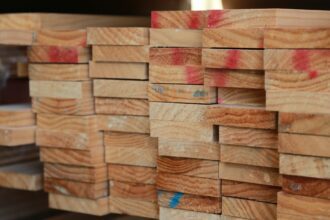
AI illustration on MiDeer Observer
Source: K&H LUMBER
Disclaimer: This article is compiled from publicly available sources for general information only. The analysis and commentary are editorial opinions. MiDeer Observer does not guarantee the accuracy or completeness of the information provided. Readers should seek independent professional advice before relying on this content, or contact us for more information.